
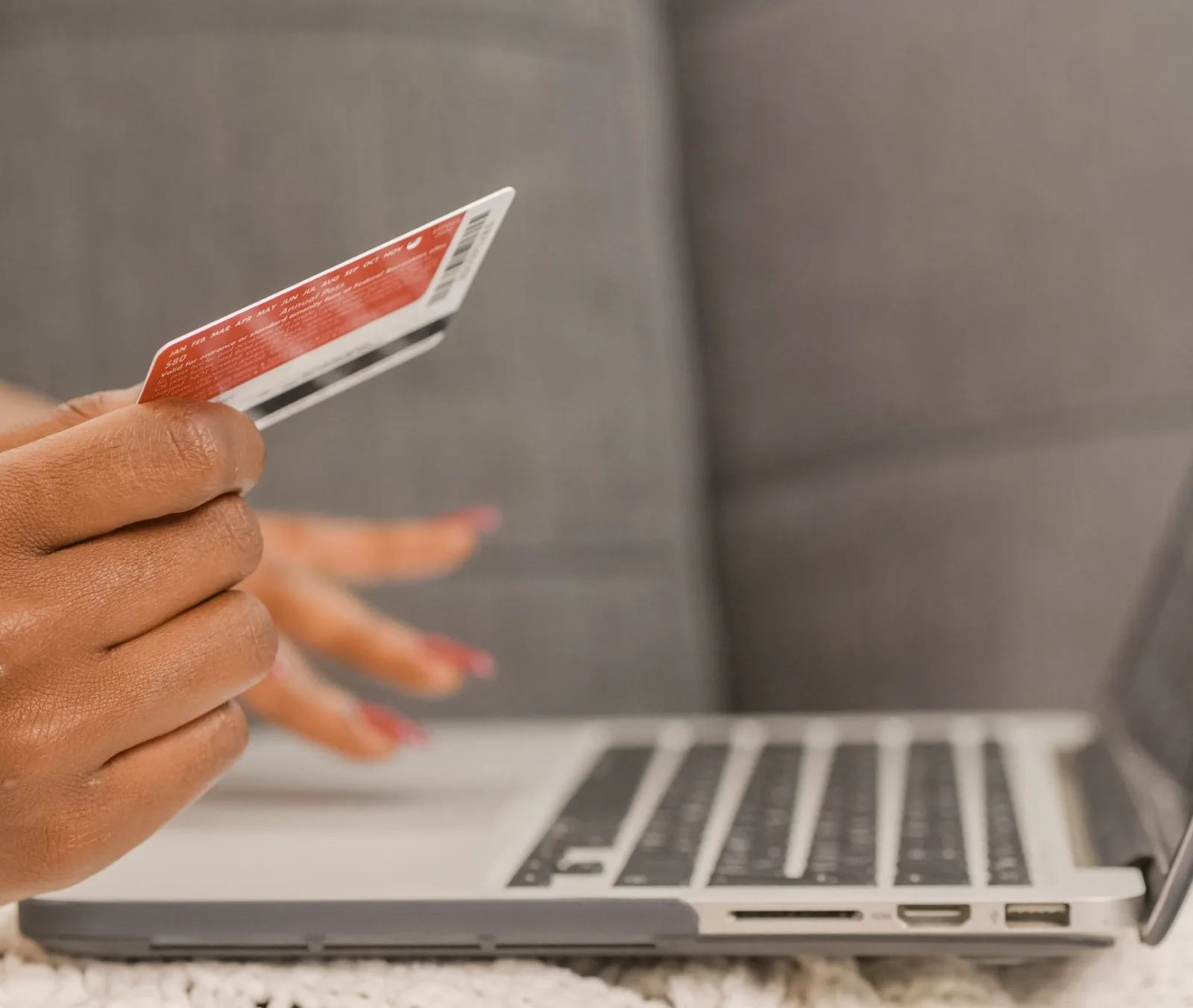
The whole thing takes about seven seconds.
You see something while you're scrolling. You tap a one button and it's on its way to your house. You don't even have to type a card number. You don't get up to find your wallet. Nowhere in those seven seconds is there a moment where you stop and ask whether you actually want the thing, because the buying is over before that question has time to show up.
It wasn't always like this. And it didn't get this way by accident.
For most of the history of buying things, there was a gap between wanting something and owning it. You had to go to the store, or dig out your card and type in sixteen digits and an address and a billing zip. As annoying as that was, it may have been secretly helping us. It was where we quietly had time, even if for a few seconds, before a purchase to ask ourselves if we truly wanted this. Somewhere around entering your card for the third time, a small voice would go, "wait, do I actually need this?" and sometimes you'd listen.
The last twenty-five years have been one long project to delete that gap. I don't think most of us noticed it happening(I certainly didn't), because it happened one convenient little step at a time.
It all started with one click
In 1999, Amazon patented one-click buying. No cart, no checkout, no four pages of information you've already typed a hundred times. One button. It felt like magic.
What Amazon understood, and what every retailer learned from them, is that each step in a checkout is a chance for you to change your mind. A typical online checkout has fifteen to twenty form fields, and every one of them is a tiny moment to pause and reconsider. Strip them away and you can go from "ooh" to "ordered" in about seven seconds, which is faster than the part of your brain that second-guesses things can even get a word in.
Think about it like the gym. If you want to work out, it's a lot easier when the gym is your living room than when it's a thirty minute drive each way. The friction decides the outcome more than the motivation does. Shopping figured this out and moved the gym into your living room.
Then shopping moved into the scroll
We talk a lot about how TikTok and Instagram hijack your attention. The dopamine, the algorithm, the feed that never ends. For some reason we almost never talk about it in terms of shopping, even though shopping is the whole point.
You're on Instagram, not trying to buy anything. An ad slides by. The glasses look great on the model. One tap later they're headed to your door and you're down fifty bucks, and you weren't even shopping, you were just looking at your phone. That's the business model. that's why Meta and Google are worth what they're worth. The feed is the store, and you're standing inside it most of the day.
Then they took your wallet out of it
Shopify's Shop Pay rolled out, and suddenly that little fast-checkout button showed up on what felt like every store on the internet. Apple Pay, Link by Stripe, the card autofill built into your browser, all of them working together so you never have to pull out a physical card and type anything again.
The logic is simple, and it isn't a secret: the less time and effort between you and "confirm purchase," the more people go through with it. The Baymard Institute found that improving checkout design alone can lift conversions by about a third. Shop Pay reportedly converts at almost twice the rate of a normal checkout. None of this is evil. It's just very, very good at getting you to the finish line, and the finish line is you spending money.
Then they took away the part that hurts
The next shift is the one I find most interesting, because it goes after something deeper than convenience.
Paying for things is supposed to sting a little. Behavioral economists Drazen Prelec and George Loewenstein gave this a name back in 1998: the pain of paying. When you hand over cash and watch your wallet get thinner, you feel the loss. A 2007 brain-imaging study found that paying actually lights up the same region of the brain that processes physical pain. That sting is annoying, but it's also useful. It's a brake and when you feel it more you tend to overspend less.
Every payment upgrade of the last two decades has filed that brake down. Cards hurt less than cash. Tapping your phone hurts less than a card. And buy now, pay later might be the cleanest removal of the sting yet. Instead of "I'm spending $240," it lets you think "I'm spending $60 today," and the other $180 becomes future-you's problem.
It works on people, especially younger people. In a 2025 Motley Fool survey, about one in four users said they regretted using buy now, pay later once they saw how much they actually owed. Around 19% had lost track of their upcoming payments. More than half said they'd used it to buy something they couldn't otherwise afford. A Bankrate survey from the same year found nearly half of users had hit a problem like overspending, a missed payment, or regret, and Gen Z reported the most problems of any group.
And notice which direction the friction got removed. Buying is seven seconds. Try to return something, cancel a subscription, or get a refund, and suddenly you're in a maze. The effort didn't disappear. It just got moved to the one side where it works against the company instead of for it.
This isn't a willpower problem
I want to be clear about something you're not bad with money because you bought the glasses. None of this is a character flaw. You're a normal person with a normal brain, up against twenty-five years and billions of dollars of very smart people whose actual job is to delete the moment where you'd stop and think. Of course it works. It's built to work.
And spending money is not the enemy. Buy the coffee. Buy the concert ticket. Buy the thing that makes a regular Tuesday better. The problem was never spending. It's the handful of purchases you'd take back if you'd had three more seconds, the ones that quietly eat the trip you're trying to save for.
A few things I do to put the gap back. I don't save my card information anywhere. If I want to buy something, I have to get up, grab my physical card, and type it in. Same with my address. It's mildly annoying, and it has talked me out of more than a few purchases, because the annoyance buys me the exact pause they spent all that money removing. I also try to just breathe for a second and ask whether I want the thing or just want to feel something.
It helps. It's not foolproof. I still slip, because no amount of breathing beats a system this good, and I'm not a perfectly disciplined person. Nobody is.
That's the reason I'm building Chirpin. I wanted a debit card that could hold the line for me when I asked it to: cap the spending I want capped, slow down the purchases I tend to regret, and stop the ones I've already decided I don't want to make, only ever on the terms I set myself. The internet spent a quarter century making it frictionless to spend and we're here make it a little easier not to. Thanks for reading!
If you're intrested, you can join the waitlist here. Every sign up helps!
Sources
- Amazon 1-Click patent (US 5,960,411), filed 1997, granted September 28, 1999: Google Patents· Amazon's original press release
- Checkout form fields and the ~35% conversion lift from better checkout UX: Baymard Institute, Checkout Usability Research
- Shop Pay conversion lift (1.72x / up to ~50% over guest checkout, Shopify's own data): Shopify
- "Pain of paying" — Prelec, D. & Loewenstein, G. (1998), The Red and the Black: Mental Accounting of Savings and Debt, Marketing Science 17(1), 4–28: publisher (INFORMS)
- 2007 brain-imaging study — Knutson, Rick, Wimmer, Prelec & Loewenstein (2007), Neural Predictors of Purchases, Neuron 53(1), 147–156: full text (NIH/PMC)
- Buy now, pay later regret and lost-track-of-payments stats: Motley Fool Money, 2025 Buy Now, Pay Later Trends Study
- Buy now, pay later problems and Gen Z data: Bankrate, 2025 Buy Now, Pay Later Survey